


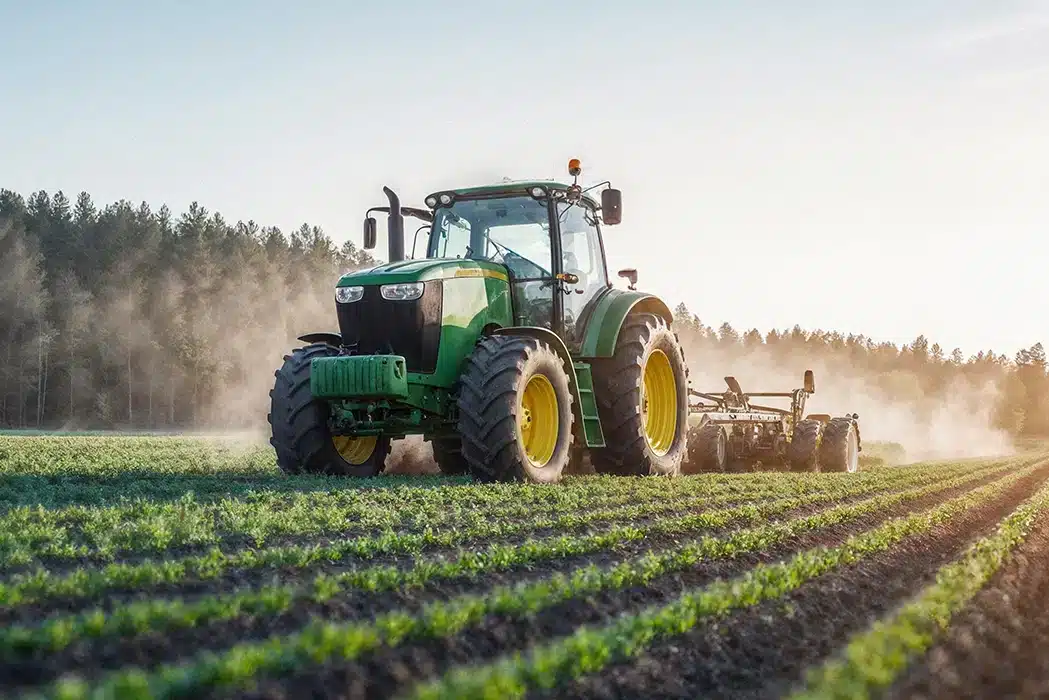
Every farm has one truth: your entire year rides on a 120‑day window. No second chances. No margin for error.
But here’s the catch: unplanned downtime costs U.S. growers more than $1.2 billion each year, largely from unexpected failures and idle machines. Yet most operations still rely on manual dispatch, radio calls, and gut instincts to keep harvest rolling.
Meanwhile, the industry doesn’t wait: the global agriculture telematics market is projected to grow at a 12.4% CAGR through 2030. That means smarter, connected fleets are rapidly becoming the competitive norm—not the optional upgrade.
The result? Thousands of modern farms are hemorrhaging opportunity every season—chasing yield with outdated coordination tools. A single equipment delay or idle hour during harvest can translate to tens of thousands in lost revenue.
Your 120-day window isn’t a countdown: it’s a proving ground. The question investors will ask isn’t “Can you survive harvest?” but “Can you outperform it?”
The Million-Dollar Coordination Nightmare
When you’re running a multi-million-dollar fleet, one bad day can feel like your entire season is on the line—and too often, it is.
Coordination isn’t just a challenge during harvest—it’s a high-stakes gamble. Between combines, sprayers, tractors, grain carts, and haul trucks, the average farm juggles 15–25 critical machines in peak season. Every one of them needs the right operator, in the right place, at the right time.
The problem? Manual coordination simply can’t keep up with the pace and precision your margins demand. One machine throws a fault, nobody has real-time visibility, and suddenly you’re down a combine with no backup plan. A late message to a driver adds another hour of downtime. A miscommunication between maintenance and operations leaves a $10 part holding up a $800,000 asset.
And because harvest doesn’t wait, every small mistake compounds. One failure starts a domino effect:
- A combine stalls, trucks sit idle.
- Operators shift jobs, leaving other machines unmanned.
- Maintenance scrambles, parts are delayed, fields stay unharvested.
- Weather closes in, cutting your already narrow window even further.
This isn’t just operational frustration—it’s real dollars lost. A single idle hour during harvest can cost upwards of $12,000 in missed yield and equipment underutilization. Multiply that across a week of cascading delays, and you’re staring down six-figure losses—not from lack of effort, but lack of coordination.
The harsh truth? Traditional radio calls, spreadsheets, and “we’ll figure it out” planning simply don’t scale to today’s fleet complexity. Modern farms are effectively running mobile factories in the field, and without connected intelligence, even well-staffed teams are vulnerable to crippling inefficiencies.
But here’s the good news: it doesn’t have to be this way. Farms using connected equipment intelligence systems are breaking this cycle, ensuring every asset is visible, every operator is optimized, and no single failure derails the entire season.
Your Equipment’s Make-or-Break 120 Days
The coordination nightmare we just explored isn’t just inconvenient—it’s devastating when you consider how little time you actually have to make your entire fleet pay for itself.
For most farms, everything rides on a 120-day window. Eight months of preparation—all the maintenance, planning, and investments—come down to just four months of performance. If equipment fails or sits idle during that period, the losses are immediate, irreversible, and staggering.
Consider this: a top-tier harvester costing $800,000 has only 120 days to justify its existence. Every breakdown, every delay, every misplaced operator cuts directly into its ROI. Six idle hours during harvest? That’s $75,000 in lost opportunity, gone forever.
Yet many operations are stuck in a reactive cycle, waiting for breakdowns to happen and scrambling to fix them. Seasonal readiness checks often happen late—or not at all—because managers are drowning in manual tracking and guesswork. The result? A rushed start to harvest, unexpected failures mid-season, and costly overnight fixes that never address the root problem.
Without precision visibility, it’s impossible to know:
- Which machines are underutilized or overworked during peak hours.
- Whether maintenance timing is optimal—or setting you up for mid-season downtime.
- How operator assignments are impacting performance and yield.
It’s not just about fixing problems faster; it’s about preventing them before they derail the entire season. Modern farms embracing telematics-powered readiness tools are changing the game—tracking every critical machine in real time, predicting part failures weeks before they happen, and ensuring their fleet hits maximum output when it matters most.
The next section digs into an even more hidden—and expensive—threat: the $500,000 cost of running your operation on spreadsheets and intuition. It’s a silent drain on your margins that only connected intelligence can stop.
The Hidden $500K Cost of Manual Tracking
Even when everything looks on track, relying on manual tools—spreadsheets, call-ins, and gut instincts—leaves half a million dollars in missed opportunity on the table every season.
Lots of farms rely on intuition for scheduling and resource deployment—100% human-led dispatching. The result? One key inefficiency: productivity loss of around 25% due to operator-equipment mismatches and lack of real-time visibility.
Fact: Breakdown management isn’t merely parts and labor—it’s lost yield, delays, and emergency labor. According to university and industry data, reactive maintenance costs can run 3 to 5 times higher than proactive predictive maintenance because it triggers stoppages, rushed repair hires, and emergency replacements.
Machine idle time is also deceptively expensive. Industry standard equipment costing around $140–185 per acre in operating cost includes depreciation, fuel, and labor—even when a machine is sitting idle on standby.
Layer these costs over peak season, and the math is stark: 25% productivity drag, 3–5× cost inflation for reactive repairs, and idle cost bleed all combine to eat into margin by hundreds of thousands.
You’re managing a multi-million-dollar fleet mission in the field—and if your coordination still lives in spreadsheets, you’re unknowingly accepting a six-figure opportunity loss.
The alternative? A telematics and real-time monitoring solution that:
- Automatically assigns the nearest available operator to the closest machine.
- Flags equipment at risk of downtime before it fails.
- Tracks idle hours and idle cost in real-time.
- Recommends maintenance scheduling based on actual usage and error codes.
These capabilities close the coordination gap and reclaim productivity. In the next section, we’ll show how farms go from reactionary chaos to predictive precision—using real-time intelligence to squeeze every dollar out of that 120-day season.
From Reactive Crisis to Predictive Precision
Imagine every machine telling you exactly what it needs before it fails—no surprises, no costly breakdowns, no lost harvest days.
That’s the power of shifting from reactive maintenance to predictive precision.
Predictive maintenance isn’t just smarter—it’s more profitable. According to the U.S. Department of Energy, farms and operations using predictive maintenance see cost savings of up to 40% compared to reactive approaches, and 8–12% more than preventive maintenance.
Here’s how predictive systems transform operations:
- Real-time sensors detect equipment wear, low fluid levels, or component degradation before failure.
- Algorithm-driven alerts schedule maintenance during downtime windows—never in peak harvest hours.
- Spare parts and labor are deployed proactively, avoiding emergency rushes and overtime markups.
- Operators are automatically matched to the best equipment available—based on location, certification, and performance history.
The result? Farms embracing predictive farming tech are reporting average productivity gains of 23%, alongside an 87% reduction in downtime. These improvements come not from adding machines or staff, but from streamlining coordination and eliminating bottlenecks.
Consider the difference: a reactive system reacts only after failure—from detection to repair, valuable harvest hours are lost, maintenance is rushed, and costs spike. Predictive precision flips that equation: it prevents failures, stretches machine life, and ensures operations run uninterrupted during that critical 120-day window.
This isn’t a future promise—it’s reality for modern farms armed with connected tools and telematics. These farms no longer treat downtime as a cost—they treat it as an anomaly.
ROI Reality – The Numbers That Matter
It’s one thing to talk about efficiency gains. It’s another to see the hard numbers that make predictive precision impossible to ignore.
Take a 2,400-acre commercial grain operation running a $3.2M equipment fleet. Before implementing a telematics-driven predictive maintenance solution, they lost an estimated $750K annually to downtime, emergency repairs, and inefficient operator-equipment pairings.
After deploying an integrated solution with real-time monitoring, predictive alerts, and automated task coordination, the results were undeniable:
87% reduction in downtime – from 46 hours to just 6 across their critical harvest window.
$185K annual maintenance savings – due to fewer emergency callouts and better-timed part replacements.
340% ROI within the first season – paying back the entire investment in just 4.2 months.
$890K in prevented losses – a single near-miss was caught by a predictive gearbox alert before the harvester failed mid-harvest.
These aren’t isolated results. A Deloitte industry study found predictive maintenance systems typically reduce overall maintenance costs by 20-25% and eliminate up to 70% of breakdowns. Farms that integrate telematics solutions not only see higher uptime but also gain better data-driven decision-making power on future equipment investments.
This is where the conversation shifts from “Can we afford this?” to “Can we afford not to?” Every day your fleet runs on reactive maintenance, you’re accepting losses that compound season over season.
Don’t Wait Until Next Season to Act
Every day your fleet runs without predictive precision, you’re gambling with your most critical 120 days of the year. The cost of waiting isn’t just another line item—it’s lost harvest, missed contracts, and preventable breakdowns that ripple through your entire operation.
Peak season doesn’t wait. Neither do equipment failures. The farms getting ahead now are locking in their systems months before harvest, ensuring every machine is optimized, monitored, and ready to deliver.
With limited implementation windows and increasing competitive pressure, the real risk isn’t investing—it’s delaying. Every day you stay reactive, you’re leaving money on the table and exposing your operation to another season of uncertainty.
Schedule a personalized telematics assessment to see exactly how much downtime and lost opportunity you can eliminate before next season.
Or, if you’re not ready for a conversation yet, download our ROI worksheet to calculate the cost of running your fleet on guesswork for another harvest.
Your next 120 days could define your entire year. The question is: will you be ready


